

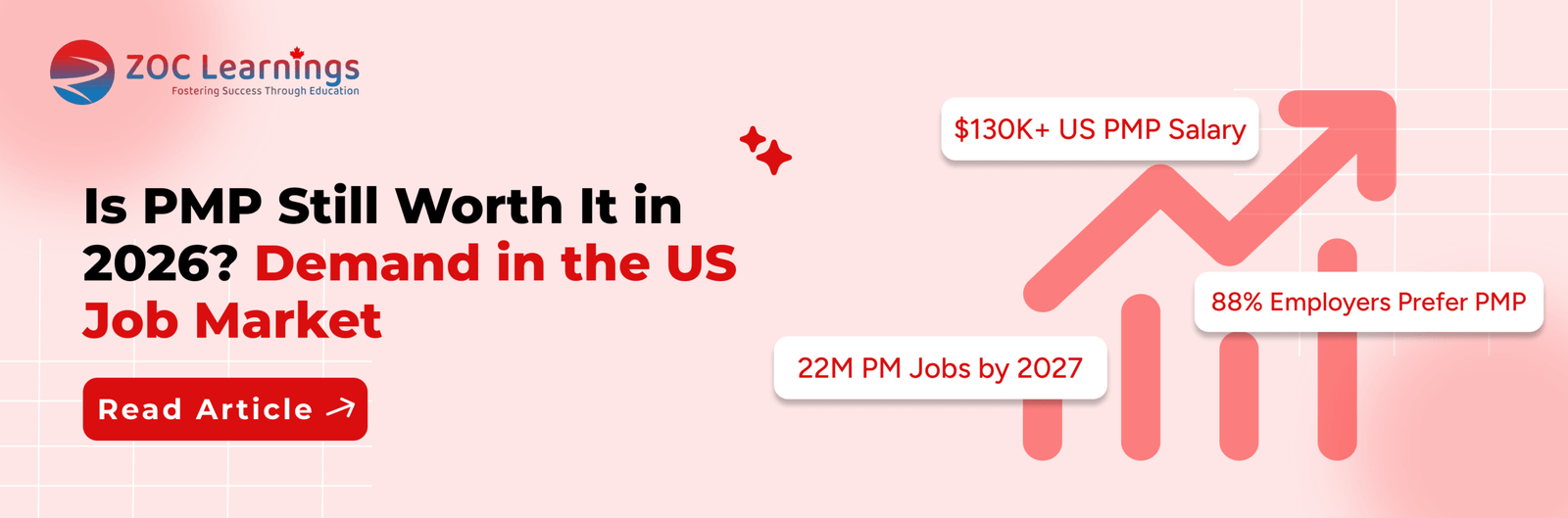
Key Takeaways:
- PMP certification worth it 2026 remains highly valuable in 2026 due to strong demand for skilled project managers across industries.
- The US job market continues to offer high salaries and career growth opportunities for PMP-certified professionals.
- Digital transformation, AI adoption, and global projects are increasing the need for structured project leadership.
- PMP delivers strong ROI through salary growth, leadership roles, and long-term career stability.
In 2026, the question is no longer whether project management is important, it is whether professionals are equipped to handle its growing complexity. As businesses scale digital initiatives, adopt AI, and expand globally, the demand for skilled project leaders continues to rise.
PMP certification remains one of the most reliable ways to validate this capability in the US job market. It is not just relevant, it is increasingly strategic.
Current Demand for PMP in the US
The demand for project management professionals in the United States remains strong and stable. Organizations across industries require leaders who can manage complex initiatives, coordinate teams, and deliver measurable outcomes.
- Digital transformation projects are driving demand for experienced project managers
- Cross-functional and global projects require structured leadership and coordination
- Project-oriented roles are expected to grow significantly, with millions of new jobs globally
- US job growth in project-related roles continues at a steady pace of around 7%
This indicates that PMP is aligned with long-term workforce demand, not a short-term trend.
PMP Salary Trends in the US (2026)
One of the strongest indicators of PMP’s value is compensation. PMP-certified professionals consistently earn higher salaries than their non-certified peers.
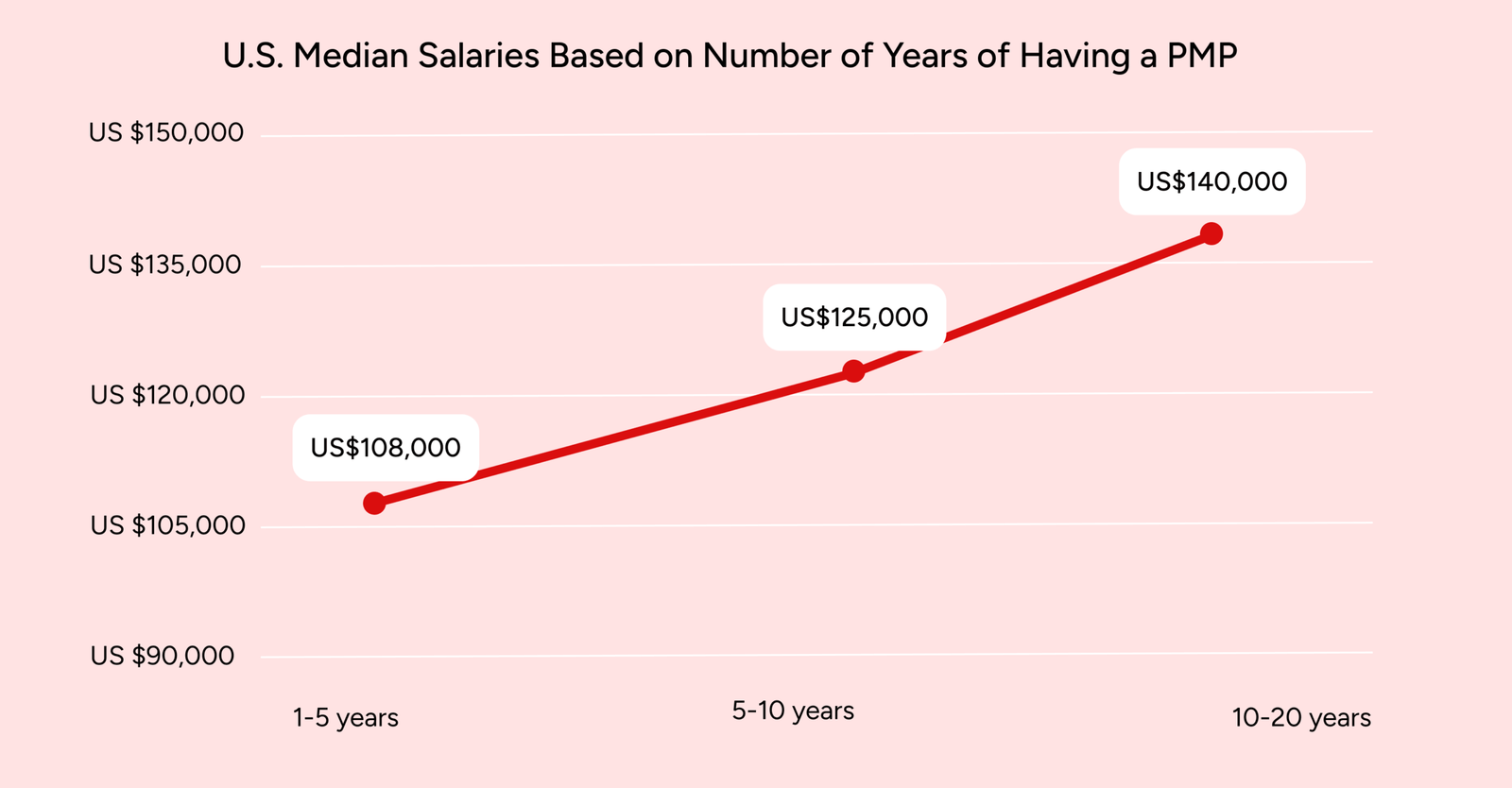
- Average PMP project manager salary in the US is around $112,000 per year
- Median salary for PMP-certified professionals reaches $135,000
- PMP holders earn 17%–24% higher salaries than non-certified professionals
- Senior professionals can earn $150,000–$180,000+ in leadership roles
These numbers clearly show that PMP is not just relevant—it is financially rewarding.
Why PMP Still Matters in 2026
The value of PMP has evolved with the market. It is no longer just a certification, it is a signal of leadership capability.
- Validates ability to manage complex, high-impact projects
- Demonstrates expertise in agile, hybrid, and predictive approaches
- Strengthens credibility in competitive job markets
- Supports transition into program, portfolio, and leadership roles
- Aligns project execution with business strategy
As organizations become more project-driven, PMP-certified professionals play a central role in execution and transformation.
PMP vs Changing Job Market Trends
The modern job market is shaped by technology, automation, and rapid change. PMP remains relevant because it adapts to these shifts.
- AI and automation increase the need for structured project oversight
- Hybrid work environments require stronger coordination and communication
- Global teams demand leadership across cultures and time zones
- Organizations prioritize value delivery over task completion
PMP aligns with all these trends by focusing on leadership, adaptability, and decision-making.
Real-World Perspective (From Professionals)
Insights from professionals suggest that PMP is valuable—but not a standalone solution.
“It can be a great foot in the door… but depends on experience.”
This highlights an important truth:
PMP works best when combined with real-world experience and domain expertise.
When PMP is Worth It (High ROI Scenarios)
PMP delivers the highest value when aligned with career goals and experience level.
- Mid-level professionals aiming for project or program management roles
- Professionals transitioning into leadership or transformation roles
- Consultants and managers working in complex, multi-stakeholder environments
- Individuals seeking global career opportunities, especially in the US market
When PMP May Not Be Enough
While PMP is valuable, it is not a shortcut to success.
- It does not replace real project experience
- Entry-level professionals may see limited immediate impact
- Industry specialization (IT, construction, healthcare) still matters
- Skills like communication, leadership, and strategy remain critical
Keep in Mind
- PMP is most powerful when combined with experience
- Demand for project managers is steady and growing
- Salary benefits are consistent across industries
- Digital transformation is increasing the need for PMP skills
- Long-term ROI is stronger than short-term gains
Final Verdict: Is PMP Still Worth It in 2026?
Yes, PMP is absolutely worth it in 2026, especially in the US job market.
However, its value lies not just in certification, but in how it complements your experience, skills, and career direction. PMP remains a strong differentiator for professionals aiming to lead projects, drive transformation, and deliver business value in an increasingly complex world.
Frequently Asked Questions (FAQS)
1. Is PMP still in demand in the US in 2026?
Yes, demand remains strong due to digital transformation, global projects, and increasing need for structured project leadership.
2. What is the average PMP salary in the US?
The average salary is around $112,000, with higher earnings for experienced professionals.
3. Does PMP guarantee a job?
No, but it significantly improves job prospects and credibility when combined with experience.
4. Is PMP worth it for career growth?
Yes, it supports advancement into leadership, program management, and strategic roles.
5. Who should pursue PMP in 2026?
Mid-level professionals, aspiring project leaders, and those involved in transformation or cross-functional projects.