Key Takeaways:
PMP certification for digital transformation leaders builds strategic capability to align projects with business value and innovation.
- PMP certification helps professionals manage complex digital initiatives involving agile, hybrid, and cross-functional teams.
- The PMP framework strengthens leadership, stakeholder alignment, and execution in technology-driven business environments.
- Digital transformation success depends on structured delivery, governance, and adaptability core strengths of PMP-certified leaders.
“PMP is not just about managing projects. It is about leading change, delivering value, and turning strategy into measurable results.”
Digital transformation is no longer optional, it is a business necessity. Organizations across industries are adopting new technologies, data-driven strategies, and agile ways of working to stay competitive. In this evolving environment, leadership requires more than technical understanding. It demands structured execution, strategic alignment, and the ability to deliver value at scale.
This is where PMP certification becomes highly relevant for digital transformation leaders. It provides a disciplined framework to manage complexity, lead change, and ensure successful delivery of transformation initiatives.
What is PMP Certification in the Context of Digital Transformation?
PMP certification represents globally recognized expertise in project management, with a strong focus on delivering outcomes aligned with business strategy. For digital transformation leaders, it acts as a structured foundation to manage initiatives that involve technology, people, and process change simultaneously.
Digital transformation projects often involve uncertainty, rapid iteration, and multiple stakeholders. PMP equips leaders to handle these challenges effectively.
Key capabilities developed:
- Structured project governance and execution
- Integration of agile, hybrid, and predictive delivery models
- Stakeholder communication and alignment
- Risk management in complex digital environments
- Focus on measurable business value and outcomes
Why Digital Transformation Leaders Need PMP
Digital transformation initiatives are inherently complex. They involve cross-functional teams, evolving requirements, and high strategic impact. Without structured management, such initiatives often fail to deliver expected value.
PMP certification helps leaders bring clarity, discipline, and direction to transformation efforts.
- Aligns digital initiatives with business strategy and value delivery
- Enables effective management of cross-functional and global teams
- Strengthens leadership in uncertain and rapidly changing environments
- Improves decision-making through structured frameworks
- Enhances credibility in leadership and transformation roles
Role of PMP in Driving Digital Transformation Success
Digital transformation is not only about adopting technology it is about delivering measurable outcomes. PMP-certified leaders focus on execution excellence and value realization.
- Ensures clear project objectives linked to business goals
- Establishes governance structures for transformation programs
- Enables efficient resource planning and utilization
- Improves risk identification and mitigation
- Supports continuous monitoring and performance tracking
By applying PMP principles, leaders can move beyond experimentation and ensure consistent, scalable success in transformation initiatives.
PMP vs Traditional Project Management in Digital Context
- PMP emphasizes value delivery, not just task completion
- Strong integration of agile and hybrid delivery models
- Greater focus on leadership, adaptability, and stakeholder engagement
- Scenario-based decision-making replaces rigid planning approaches
- Continuous improvement and feedback-driven execution
Traditional project management often struggles in dynamic digital environments. PMP bridges this gap by combining structure with flexibility.
Key Skills PMP Builds for Transformation Leaders
Digital transformation leaders must operate at the intersection of business strategy and technology execution. PMP certification develops essential skills required in this role.
- Strategic thinking and business alignment
- Agile and hybrid delivery expertise
- Leadership and team management
- Stakeholder communication and influence
- Risk and change management
- Performance measurement and value tracking
These skills ensure that leaders can not only plan transformation initiatives but also deliver them successfully.
- Digital transformation requires both leadership and structured execution
- PMP strengthens decision-making in uncertain and evolving environments
- Hybrid and agile knowledge is critical for modern transformation projects
- Stakeholder alignment is key to transformation success
- Value delivery matters more than activity completion
How PMP Enhances Career Growth in Digital Roles
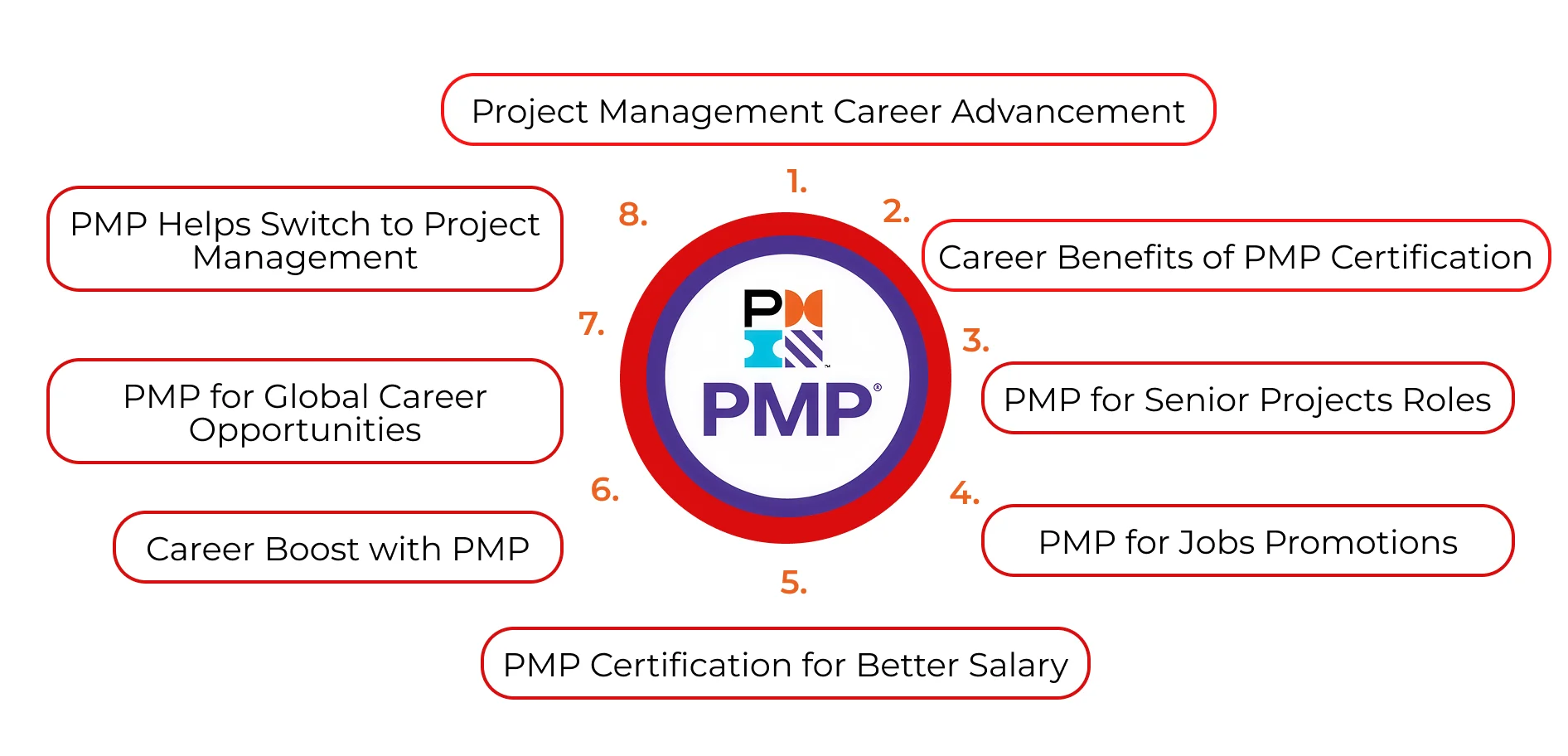
PMP certification significantly enhances career opportunities for professionals involved in digital transformation. Organizations actively seek leaders who can combine strategic vision with execution capability.
- Opens opportunities in digital transformation leadership roles
- Strengthens profile for program and portfolio management positions
- Enhances global recognition and employability
- Builds credibility in consulting and enterprise environments
- Supports long-term leadership growth in technology-driven industries
- PMP is not limited to IT, it applies across all transformation-driven industries
- Experience combined with certification creates strong leadership impact
- Continuous learning is essential in digital environments
- Real-world application of PMP concepts drives career success
- Leadership mindset matters more than tools alone
Frequently Asked Questions (FAQS)
1. Why is PMP important for digital transformation leaders?
PMP provides a structured framework to manage complex transformation initiatives, ensuring alignment with business goals and successful execution.
2. Can PMP be applied to agile digital projects?
Yes, PMP integrates agile and hybrid approaches, making it highly relevant for modern digital transformation environments.
3. Is PMP suitable for non-technical leaders in digital transformation?
Yes, PMP focuses on management, leadership, and delivery, making it valuable even for non-technical professionals.
4. Does PMP improve career opportunities in digital transformation?
Yes, it enhances credibility and opens leadership roles in transformation, consulting, and program management.
5. What skills does PMP develop for transformation roles?
It develops leadership, strategic alignment, stakeholder management, risk control, and value-driven execution.

darsshan kaur
Global COO of ZOC Group with 18+ years of experience driving business growth across Canada, UAE, USA, and India. She specializes in strategic partnerships, Agile transformation, and cybersecurity consulting, helping tech leaders build strong leadership presence and achieve measurable ROI.