CAPM vs PMP: Which Certification Is Better in 2026?
Key Takeaways
- CAPM and PMP are two globally recognized project management certifications offered by PMI.
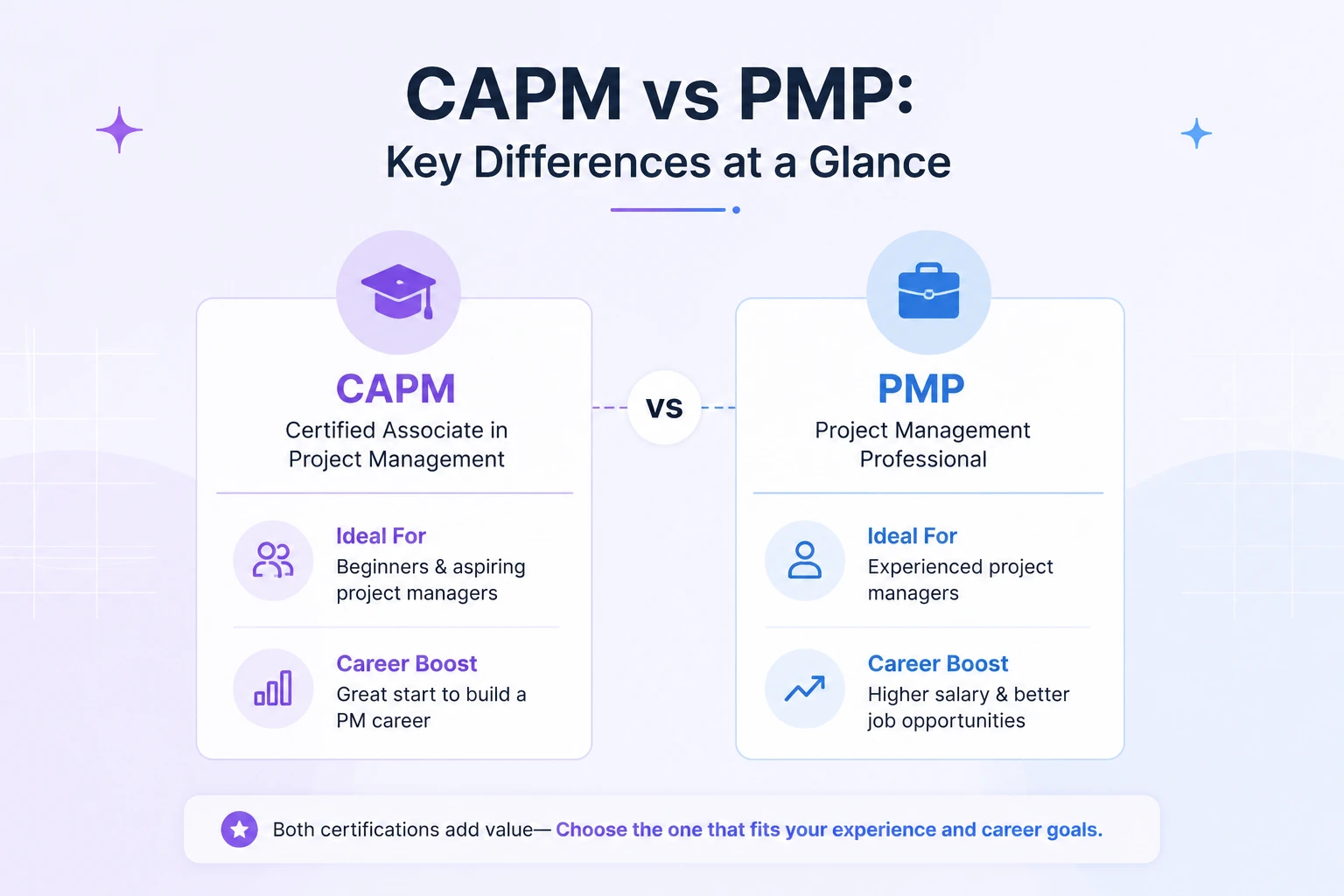
- CAPM is designed for beginners and aspiring project managers with limited project management experience.
- PMP is intended for experienced professionals who manage projects and lead teams.
- PMP generally offers higher salary potential and greater career opportunities.
- CAPM serves as an excellent foundation for professionals looking to enter the project management field.
- The right certification depends on your experience level, career goals, and professional background.
CAPM vs PMP: Which Certification Is Better in 2026?
Project management continues to be one of the most in-demand professional skills across industries. As organizations invest in digital transformation, infrastructure development, and business growth initiatives, skilled project managers are becoming increasingly valuable.
Among the most respected project management credentials worldwide are the
Certified Associate in Project Management (CAPM) and the
Project Management Professional (PMP) certifications.
Both certifications are offered by the Project Management Institute (PMI) and are recognized by employers globally. However, they serve different purposes and target different stages of a professional’s career.
If you are planning a career in project management, understanding the differences between CAPM and PMP can help you make the right decision in 2026.
What is CAPM Certification?
The
Certified Associate in Project Management (CAPM) certification is an entry-level credential offered by PMI.
It is designed for individuals who want to build a strong foundation in project management concepts, processes, and terminology.
CAPM is ideal for:
- Fresh graduates
- Entry-level professionals
- Project coordinators
- Business analysts
- Team members working on projects
- Professionals looking to transition into project management
The certification demonstrates an understanding of project management principles and best practices.
What is PMP Certification?
The
Project Management Professional (PMP) certification is PMI’s flagship credential for experienced project managers.
PMP validates a professional’s ability to:
- Lead projects
- Manage teams
- Control budgets and schedules
- Handle project risks
- Deliver business objectives
- Align projects with organizational strategy
PMP is considered one of the most prestigious certifications in project management.
It is intended for professionals with substantial project management experience.
CAPM vs PMP: Key Differences
| Feature |
CAPM |
PMP |
| Level |
Entry-Level |
Advanced |
| Target Audience |
Beginners |
Experienced Professionals |
| Experience Requirement |
Not Required |
Required |
| Focus |
Project Management Fundamentals |
Project Leadership and Execution |
| Difficulty Level |
Moderate |
Advanced |
| Career Stage |
Early Career |
Mid to Senior Career |
| Salary Potential |
Moderate |
High |
| Industry Recognition |
Strong |
Very Strong |
Eligibility Requirements
CAPM Eligibility
To qualify for CAPM, candidates typically need:
- A secondary diploma (high school diploma or equivalent)
- Project management education as required by PMI
CAPM is accessible to professionals with little or no project management experience.
PMP Eligibility
To qualify for PMP, candidates must meet specific education and project management experience requirements.
Generally, candidates need:
- A four-year degree and project management experience
or
- A secondary diploma and additional project management experience
PMP is intended for professionals who have already managed projects and teams.
Who Should Choose CAPM?
CAPM is an excellent option for individuals who are new to project management.
It is particularly suitable for:
Students and Graduates
CAPM helps build project management knowledge before entering the workforce.
Career Changers
Professionals transitioning into project management can demonstrate commitment to the field.
Junior Professionals
Project coordinators and support staff can strengthen their understanding of project management processes.
Future PMP Aspirants
Many professionals use CAPM as a stepping stone toward PMP certification later in their careers.
Who Should Choose PMP?
PMP is best suited for professionals with significant project management experience.
Ideal candidates include:
Project Managers
Professionals already managing projects can validate their expertise.
Team Leaders
Individuals leading project teams can strengthen their leadership credentials.
Program and Portfolio Professionals
PMP supports advancement into senior management positions.
Experienced Professionals Seeking Growth
PMP can accelerate career progression and increase earning potential.
Skills Gained Through CAPM
CAPM develops foundational project management competencies.
Key areas include:
- Project planning
- Scope management
- Schedule management
- Cost management
- Quality management
- Risk management
- Stakeholder management
- Communication management
These skills help professionals understand how projects are structured and managed.
Skills Gained Through PMP
PMP focuses on advanced project leadership capabilities.
Key competencies include:
- Strategic project management
- Team leadership
- Risk mitigation
- Stakeholder engagement
- Budget control
- Performance measurement
- Business value delivery
- Decision-making and problem-solving
PMP emphasizes practical application and leadership effectiveness.
CAPM vs PMP Salary Comparison
One of the biggest differences between the two certifications is earning potential.
CAPM Salary Range
United States
- $55,000 – $90,000 annually
India
UAE
- AED 120,000 – AED 220,000 annually
PMP Salary Range
United States
- $100,000 – $170,000+ annually
India
UAE
- AED 180,000 – AED 500,000+ annually
PMP-certified professionals generally earn significantly more due to their experience and leadership responsibilities.
Career Opportunities
Careers After CAPM
Common roles include:
- Project Coordinator
- Project Analyst
- Associate Project Manager
- Project Support Specialist
- Business Analyst
Careers After PMP
Popular roles include:
- Project Manager
- Senior Project Manager
- Program Manager
- PMO Manager
- Delivery Manager
- Operations Manager
PMP typically leads to more senior leadership opportunities.
Exam Difficulty Comparison
CAPM Exam
The CAPM exam focuses on project management concepts and terminology.
It is generally considered more suitable for beginners.
PMP Exam
The PMP exam is more challenging because it emphasizes:
- Real-world scenarios
- Leadership decisions
- Complex project situations
- Strategic thinking
Most professionals require significant preparation before attempting PMP.
Is CAPM a Prerequisite for PMP?
No.
CAPM is not required before pursuing PMP.
However, CAPM can be beneficial for professionals who:
- Lack project management experience
- Want to learn PMI methodologies
- Plan to pursue PMP later
Many professionals move directly to PMP once they meet the eligibility requirements.
Benefits of CAPM Certification
- Ideal for beginners
- Builds project management knowledge
- Improves employability
- Demonstrates commitment to the profession
- Provides a pathway toward PMP
Benefits of PMP Certification
- Global recognition
- Higher salary potential
- Greater career opportunities
- Enhanced leadership credibility
- Strong demand across industries
- Better opportunities for senior roles
Points to Remember
- CAPM is designed for beginners and aspiring project managers.
- PMP is intended for experienced project professionals.
- PMP offers greater salary potential and leadership opportunities.
- CAPM helps build a strong project management foundation.
- Both certifications are globally recognized by employers.
- The best choice depends on your current experience and career goals.
ZOC Learning’s Role in Your Certification Journey
ZOC Learning offers specialized training programs for both CAPM and PMP certifications.
Benefits include:
- PMI-aligned curriculum
- Expert instructors
- Practical project management case studies
- Mock exams and assessments
- Certification guidance
- Career mentoring and support
These resources help professionals prepare effectively and achieve certification success.
Frequently Asked Questions (FAQs)
1. Which is better in 2026: CAPM or PMP?
Neither is universally better. CAPM is ideal for beginners, while PMP is designed for experienced project managers.
2. Can I get PMP without CAPM?
Yes. CAPM is not a prerequisite for PMP.
3. Does PMP pay more than CAPM?
Yes. PMP-certified professionals generally earn significantly higher salaries.
4. Is CAPM worth it for fresh graduates?
Yes. CAPM helps graduates demonstrate project management knowledge and improve employability.
5. Is PMP difficult?
PMP is considered more challenging than CAPM because it focuses on real-world project management scenarios and leadership decisions.
6. Which certification has better job opportunities?
PMP typically provides access to more senior and higher-paying roles, while CAPM is valuable for entry-level project management positions.
Final Verdict
Both CAPM and PMP are excellent certifications, but they serve different career stages.
If you are new to project management and want to build foundational knowledge,
CAPM is the ideal starting point. It helps develop core project management skills and prepares you for future growth.
If you already have project management experience and want to advance into leadership roles,
PMP is the better choice. It offers stronger industry recognition, higher salaries, and greater career opportunities.
In 2026, the best certification is the one that aligns with your current experience and long-term professional goals.
TLDR
- CAPM is an entry-level project management certification for beginners.
- PMP is an advanced certification for experienced project managers.
- CAPM helps build foundational project management knowledge.
- PMP focuses on leadership, strategy, and project execution.
- PMP generally offers higher salaries and more senior career opportunities.
- Choose CAPM if you are starting your career and PMP if you already have project management experience.