

Accredited Online Doctorate in Cybersecurity Programs: A Complete Guide for Working Professionals
Cybersecurity has become one of the fastest-growing fields as organizations face increasingly sophisticated cyber threats, stricter regulatory requirements, and rapid digital transformation. As a result, many experienced professionals are pursuing an accredited online doctorate in cybersecurity to develop advanced leadership, research, and strategic management skills.
An online doctorate offers the flexibility to study while continuing full-time employment. Whether the goal is to become a Chief Information Security Officer (CISO), cybersecurity consultant, researcher, university professor, or executive leader, earning an accredited doctoral degree can enhance career opportunities and professional credibility.
This guide explains accredited online doctorate programs in cybersecurity, admission requirements, curriculum, career opportunities, and how to choose the right university.
What Is an Online Doctorate in Cybersecurity?
An online doctorate in cybersecurity is the highest academic qualification in the cybersecurity field. These programs combine advanced research, strategic leadership, information security management, governance, risk management, and emerging technologies to prepare professionals for senior leadership and academic roles.
Depending on the university, students may pursue:
- Doctor of Philosophy (PhD) in Cybersecurity
- Doctor of Business Administration (DBA) with Cybersecurity Specialization
- Doctor of Information Technology (DIT)
- Doctor of Strategic Security (DSS)
- Doctor of Engineering (DEng) with Cybersecurity focus
Many universities now offer flexible online or hybrid formats designed specifically for working professionals.
Why Accreditation Matters
Choosing an accredited university is one of the most important decisions when selecting a doctoral program. Accreditation ensures that:
- The institution meets recognized academic quality standards.
- Employers recognize the qualification.
- Credits may be transferable.
- Students may qualify for financial aid where applicable.
- The degree has greater professional credibility.
Always verify both institutional accreditation and, where relevant, any program-specific recognition before enrolling.
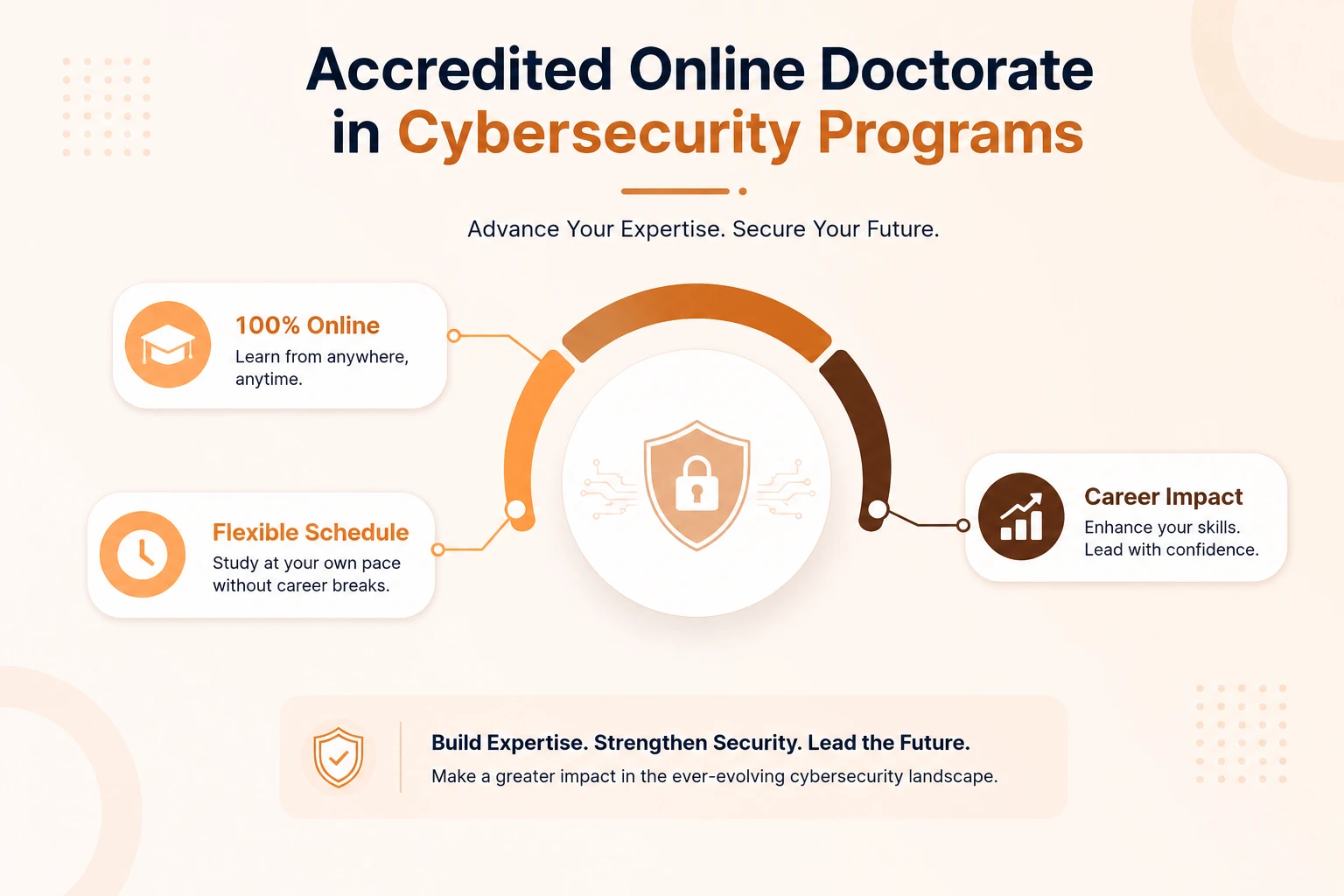
Benefits of Studying Online
Online doctoral programs offer several advantages for professionals balancing work and education. Some key benefits include:
- Flexible study schedules
- Continue working full-time
- Learn from anywhere
- Access to experienced faculty
- Digital research resources
- Opportunities to collaborate with professionals worldwide
Many programs also allow students to complete coursework asynchronously, making them suitable for busy professionals.
What Will You Study?
Although curricula vary by university, most accredited online cybersecurity doctorate programs include subjects such as:
- Cybersecurity Governance
- Information Security Management
- Cyber Risk Management
- Digital Forensics
- Cloud Security
- Cybersecurity Strategy
- Artificial Intelligence in Cybersecurity
- Secure Software Development
- Cybersecurity Policies
- Research Methodology
- Dissertation or Applied Research Project
The final stage usually involves completing original research or an applied doctoral project.
Admission Requirements
Admission requirements differ between universities, but applicants are commonly expected to have:
- A bachelor’s degree and, for many programs, a master’s degree from an accredited institution
- Relevant professional experience
- Academic transcripts
- Statement of purpose
- Letters of recommendation
- Updated résumé or CV
Some universities may also require a research proposal or interview, while others have more flexible admission processes.
Who Should Pursue an Online Doctorate?
An accredited online doctorate is suitable for professionals such as:
- Cybersecurity Managers
- Information Security Managers
- IT Directors
- Security Consultants
- Risk Managers
- Compliance Professionals
- Network Security Engineers
- Government Security Specialists
- University Faculty
- Technology Executives
The degree is particularly valuable for professionals seeking leadership or research-focused careers.
Skills You Will Develop
Students gain advanced knowledge in:
- Strategic cybersecurity leadership
- Enterprise risk management
- IT governance
- Security architecture
- Research and analytical thinking
- Cybersecurity policy development
- Digital transformation
- Regulatory compliance
- Decision-making
- Executive communication
These competencies prepare graduates to lead cybersecurity initiatives across complex organizations.
Career Opportunities After Graduation
Graduates may pursue positions including:
- Chief Information Security Officer (CISO)
- Cybersecurity Director
- Information Security Consultant
- Cyber Risk Manager
- Security Researcher
- University Professor
- Cybersecurity Policy Advisor
- Governance, Risk, and Compliance (GRC) Director
- Enterprise Security Architect
- Digital Transformation Executive
These roles are available across industries such as finance, healthcare, government, technology, telecommunications, and consulting.
How to Choose the Right Program
Before selecting an online doctorate, consider the following factors:
- Institutional accreditation
- Curriculum relevance
- Faculty expertise
- Research opportunities
- Dissertation support
- Program flexibility
- Tuition and financial aid
- Student support services
- Graduation requirements
- Industry reputation
Choosing a program that aligns with your career goals can significantly improve your long-term professional outcomes.
Is an Online Doctorate Worth It?
For experienced professionals aiming for executive leadership, research, consulting, or academic careers, an accredited online doctorate can be a valuable investment. It provides advanced knowledge, strengthens strategic decision-making skills, and demonstrates expertise in managing complex cybersecurity challenges.
Professionals interested primarily in research may prefer a PhD, while those seeking applied business leadership often choose a DBA with a cybersecurity specialization.
Final Thoughts
Accredited online doctorate programs in cybersecurity provide a flexible pathway for professionals who want to advance their careers without interrupting their employment. With organizations placing greater emphasis on cybersecurity leadership, governance, and digital resilience, doctoral graduates are well positioned for senior management, consulting, and academic roles.
When choosing a program, prioritize accreditation, curriculum quality, faculty expertise, and alignment with your career objectives. A well-chosen doctoral program can help develop the strategic, technical, and research capabilities needed to lead cybersecurity initiatives in today’s rapidly evolving digital landscape.
Frequently Asked Questions (FAQs)
What is an accredited online doctorate in cybersecurity?
An accredited online doctorate in cybersecurity is a doctoral-level degree offered by a recognized and accredited university through an online or hybrid learning format. These programs prepare professionals for leadership, research, consulting, and academic careers by developing advanced knowledge in cybersecurity, governance, risk management, and information security.
What is the difference between a PhD and a DBA in cybersecurity?
A PhD in cybersecurity focuses primarily on academic research, original contributions to knowledge, and university teaching. A Doctor of Business Administration (DBA) with a cybersecurity specialization emphasizes practical business leadership, strategic decision-making, and solving real-world cybersecurity challenges within organizations.
How long does an online doctorate in cybersecurity take to complete?
Most accredited online doctorate programs can be completed in approximately three to six years, depending on the university, study pace, transfer credits, and dissertation or research requirements. Part-time study options are also available at many institutions, making the programs suitable for working professionals.
What are the admission requirements for an online cybersecurity doctorate?
Most universities require applicants to hold a bachelor’s degree and, in many cases, a master’s degree from an accredited institution. Applicants may also need professional work experience, academic transcripts, a statement of purpose, letters of recommendation, and an updated résumé or curriculum vitae.
Can I study for an online doctorate while working full-time?
Yes. Most accredited online cybersecurity doctorate programs are specifically designed for working professionals. They offer flexible schedules, online coursework, and independent research, allowing students to balance their education with professional and personal responsibilities.
What career opportunities are available after earning a doctorate in cybersecurity?
Graduates may pursue senior roles such as Chief Information Security Officer (CISO), Cybersecurity Director, Security Consultant, Governance, Risk and Compliance (GRC) Director, Security Researcher, University Professor, Cyber Risk Manager, or Digital Transformation Executive across industries including finance, healthcare, government, technology, and consulting.
Is an accredited online doctorate in cybersecurity worth pursuing?
For professionals seeking executive leadership, consulting, research, or academic positions, an accredited online doctorate can be a valuable investment. It enhances subject-matter expertise, strengthens leadership capabilities, improves career prospects, and demonstrates advanced knowledge in managing complex cybersecurity and information security challenges.