
Key Takeaways:
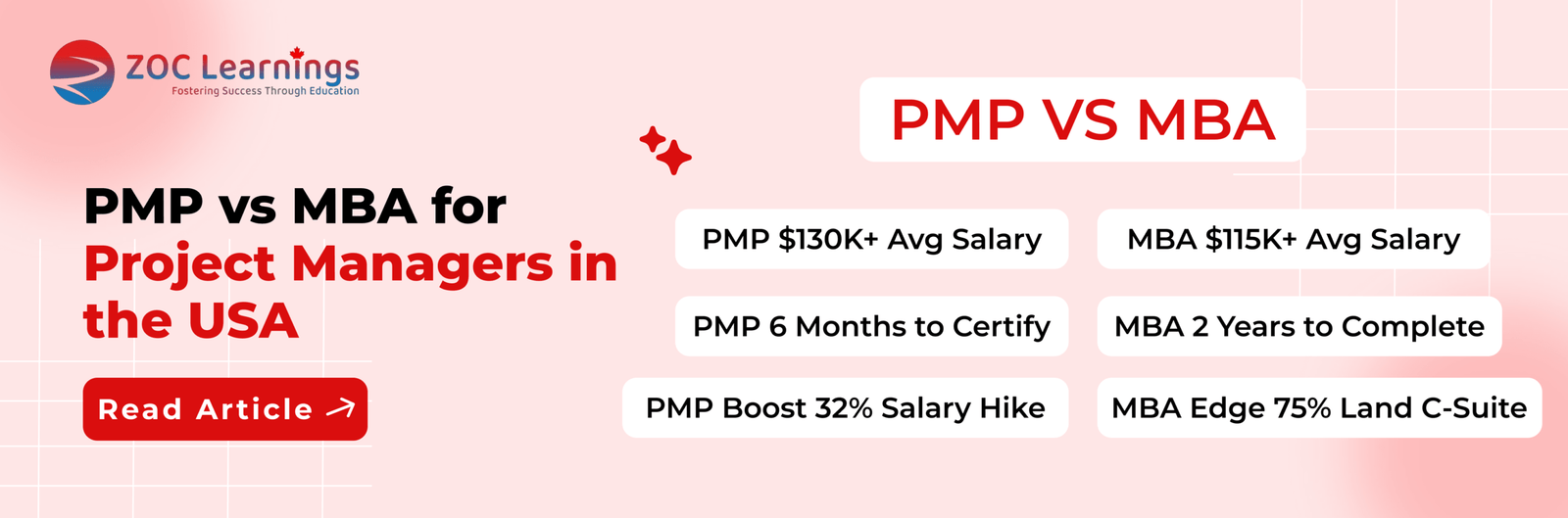
PMP vs MBA for project managers in the USA is an important career decision that depends on professional goals, industry focus, and leadership aspirations.
- PMP certification focuses on project execution, delivery frameworks, and managing complex initiatives.
- An MBA develops broader business leadership, strategic management, and organizational decision-making skills.
- Project managers in the USA often choose PMP to strengthen technical project leadership, while MBA supports long-term executive roles.
Both credentials enhance career growth, but their value depends on whether the professional wants specialization or broader management exposure.
“Choosing between PMP and MBA is not about which is better. It is about which aligns more closely with your career direction and leadership goals.”
PMP vs MBA for Project Managers in the USA
Project management has become a critical function in modern organizations, especially in industries such as technology, consulting, healthcare, finance, and construction. In the United States, professionals working in project management roles often reach a stage where they must decide how to advance their careers strategically.
Two of the most recognized paths for career growth are PMP certification and an MBA degree. Both offer strong advantages, but they serve different purposes in professional development.
Understanding the difference between PMP and MBA helps project managers make informed decisions that align with their long-term career plans.
What is PMP Certification?
PMP (Project Management Professional) certification is a globally recognized credential focused on project management expertise. It validates a professional’s ability to manage projects efficiently, lead teams, and deliver results within scope, time, and budget.
For project managers in the USA, PMP certification strengthens credibility in industries that require structured project execution.
Key capabilities developed:
- Project planning, execution, and monitoring
- Risk management and issue resolution
- Stakeholder communication and alignment
- Agile, hybrid, and predictive delivery approaches
- Performance tracking and value delivery
PMP is particularly valuable for professionals who want to specialize in project leadership and operational execution.
What is an MBA?
An MBA (Master of Business Administration) is a graduate degree focused on business leadership, strategy, finance, operations, and organizational management.
For project managers in the USA, an MBA provides a broader understanding of how businesses operate beyond project delivery.
Core areas covered in an MBA:
- Business strategy and management
- Financial decision-making
- Marketing and operations
- Leadership and organizational behavior
- Business analytics and innovation
An MBA prepares professionals for senior leadership roles such as director, executive, or business unit leader.
Key Differences Between PMP and MBA
While both credentials enhance professional growth, their focus areas are very different.
- PMP is a professional certification focused on project execution
- MBA is an academic degree focused on overall business leadership
- PMP requires project management experience before certification
- MBA can be pursued by professionals from diverse backgrounds
- PMP is shorter and more specialized compared to an MBA program
- MBA requires a higher time and financial investment
Project managers should evaluate these differences carefully before choosing a path.
When PMP is the Better Choice for Project Managers
PMP certification is often the right option for professionals who want to grow within project management roles and improve delivery capabilities.
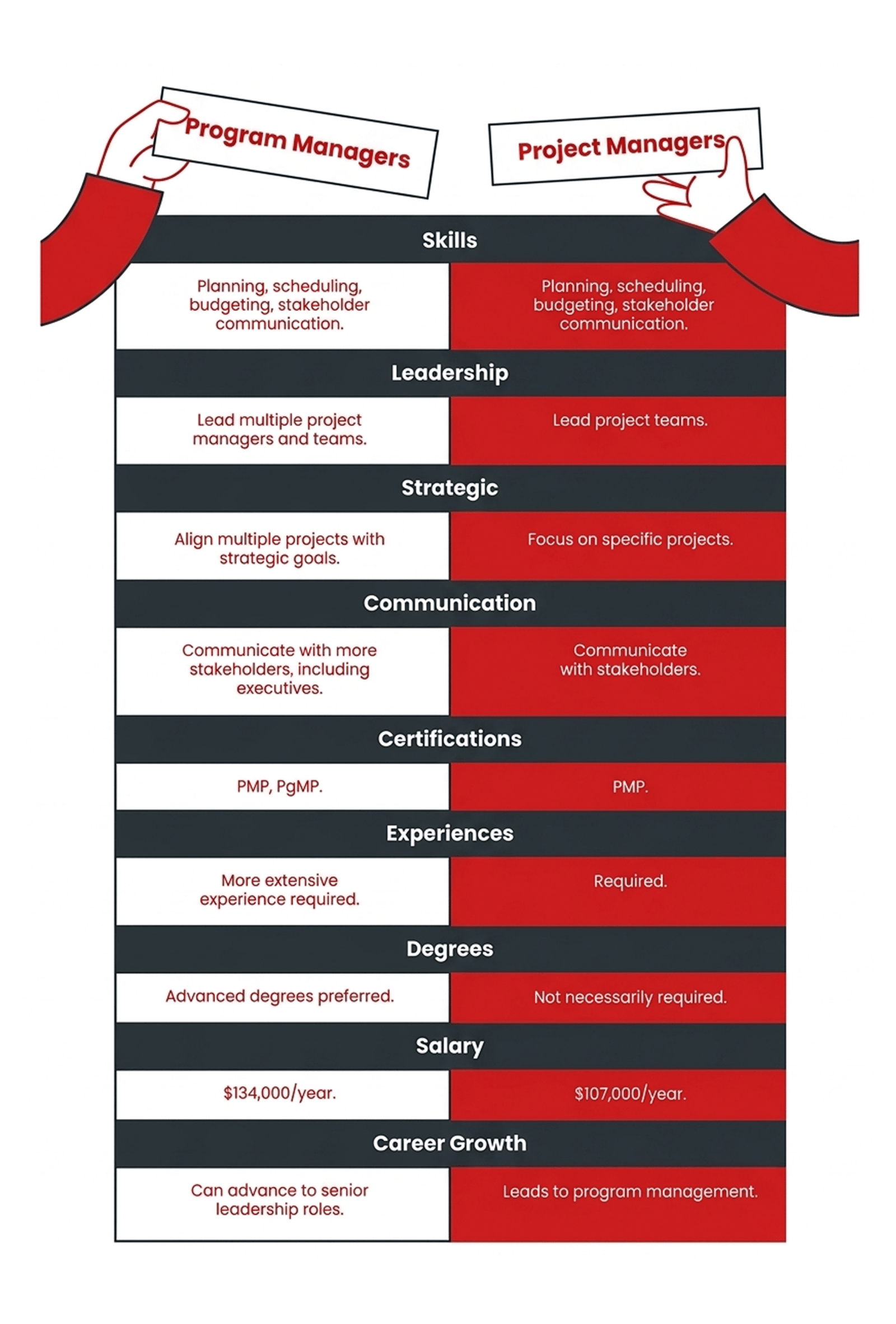
- Professionals working as project managers or program managers
- Individuals leading complex or large-scale projects
- Professionals aiming to strengthen execution and governance skills
- Those seeking faster career advancement within project management
- Project leaders working in technology, engineering, and consulting
In the USA job market, PMP-certified professionals are often preferred for roles requiring structured project leadership.
When an MBA is the Better Option
An MBA becomes more valuable when a professional wants to move beyond project execution and enter strategic leadership roles.
- Professionals planning to transition into senior management roles
- Project managers interested in business strategy and operations
- Individuals aiming for executive leadership positions
- Professionals planning career shifts into consulting or entrepreneurship
- Leaders who want deeper knowledge of finance and business strategy
MBA programs in the USA often open doors to leadership roles across industries.
Career Impact in the USA Job Market
Both PMP and MBA significantly improve career opportunities, but the outcomes differ based on the role.
PMP Career Impact:
- Higher demand for certified project managers
- Recognition in technology, consulting, and enterprise environments
- Opportunities in program and portfolio management
- Strong credibility in delivery-focused roles
MBA Career Impact:
- Access to leadership and executive-level positions
- Opportunities in business consulting and management roles
- Greater exposure to strategic decision-making
- Broader career flexibility across industries
Many professionals in the USA even choose to combine both credentials over time.
PMP and MBA: Can You Have Both?
Yes, many successful professionals pursue both PMP and MBA to build a balanced career profile.
PMP strengthens project delivery expertise, while an MBA expands business leadership capability.
Benefits of combining both:
- Strong execution and strategic leadership skills
- Higher credibility in senior leadership roles
- Better understanding of business impact of projects
- Greater career mobility across industries
This combination is particularly powerful for professionals aiming for transformation leadership roles.
Key Skills Developed by Each Path
PMP develops specialized project leadership skills, while MBA focuses on business leadership.
PMP Skills:
- Project governance and delivery frameworks
- Agile and hybrid project management
- Risk and stakeholder management
- Performance monitoring and reporting
- Resource planning and coordination
MBA Skills:
- Strategic thinking and decision-making
- Financial management and analysis
- Organizational leadership
- Market and business analysis
- Innovation and growth strategy
Both skill sets are valuable in different stages of a professional career.
Keep in Mind
- Career goals should guide the decision between PMP and MBA
- PMP is ideal for strengthening project management expertise
- MBA supports long-term leadership and executive growth
- Industry requirements in the USA may influence the choice
- Combining both can create strong leadership potential
How to Decide Between PMP and MBA
Choosing between PMP and MBA depends on where a professional wants to see themselves in the future.
Project managers should consider:
- Current career stage
- Leadership ambitions
- Industry expectations
- Time and financial investment
- Long-term career goals
Professionals focused on project delivery often choose PMP first, while those aiming for executive roles may prioritize an MBA.
Frequently Asked Questions (FAQS)
1. Is PMP better than an MBA for project managers in the USA?
Not necessarily. PMP is better for project management specialization, while an MBA is better for broader business leadership roles.
2. Do project managers in the USA prefer PMP certification?
Yes, many organizations value PMP certification because it validates structured project management expertise.
3. Can a project manager pursue PMP after an MBA?
Yes, many professionals complete an MBA and later obtain PMP certification to strengthen project leadership skills.
4. Which option is more cost-effective, PMP or MBA?
PMP is generally more affordable and requires less time compared to an MBA program.
5. Does PMP help in getting leadership roles in the USA?
Yes, PMP helps professionals advance into program management and senior project leadership roles.

Darshan Kaur
Global COO of ZOC Group with 18+ years of experience driving business growth across Canada, UAE, USA, and India. She specializes in strategic partnerships, Agile transformation, and cybersecurity consulting, helping tech leaders build strong leadership presence and achieve measurable ROI.